July 30, 2016

Gurgaon School Admissions 2017-18

Each year parents queue up in front of schools armed with some little information about the reputation of the school, a form and some sort of formal payment just to be able to enter the hallowed portals that will take their tender toddlers to success in the world. However, for the academic session 2017-18 schools in gurgaon have started nursery admission in a departure from the schedule followed last year, leaving parents confused. The admission process, which usually commences around mid-August, has already started in some schools and others are also expected to start the process soon. Parents complain that absence of an academic calendar for schools in Gurgaon is landing them in troubles.
Schools such as The HDFC School, The Millennium School, Delhi Public School Sushant Lok, Lotus Valley International School and Kunskapskollan have already started their admission process. Scottish High International, Ridge Valley School will open the registration process on August 1. Other schools, including DPS Sector 45 and Ryan International School, are also likely to start the process by mid-August.
Education experts suggest that the early start of admission by some schools is due to growing competition among them. A large part of the issue in nursery admissions is around school autonomy. Delhi seems to be leading this battle, but it was pretty much sure that the same issues will travel to other states too. The question here is should schools select their students? Should schools have autonomy in deciding the criteria for admission to their portals. The answer seems to be an obvious yes in case of the private schools.
Every year, more and more schools with better infrastructure and technology come ups in Gurgaon. These institutes give a strong competition to the existing ones, which is why schools want to start admission before others. On the other hand, schools say that they have started early admission to give more time to the parents to complete the formalities. However, for the comfort of the parents, the schools are providing forms both offline and online.
In a perfect world there would be enough nursery and school places where all children would join in small groups and be loved and nurtured as they learn. We do not live in a perfect world and there is a shortage of quality education places. From where we are, some competition for scarce seats is inevitable. Even if government schools were up to standard – and there seems to be evidence that many have slipped – there are not enough seats for all.
And the battle continues – what is the best way to allocate nursery seats? Who should get the first chance and who can be left out? Is access to excellence in education a game of chance?
source:examswatch.com/parents-baffled-as-gurgaon-schools-start-nursery-admissions-early/

February 18, 2016

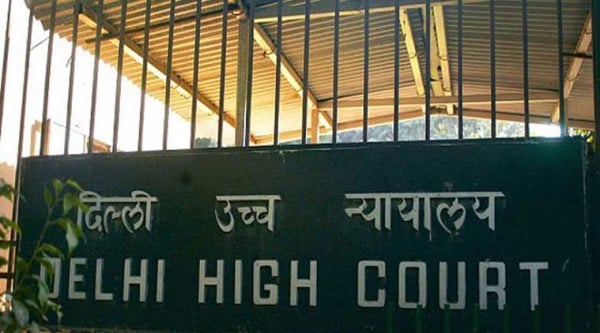
Nursery admission: Delhi HC upholds interim stay on age limit notification

The Delhi high court on Tuesday upheld its 5 February order which had stayed a notification by the Delhi government fixing four years as the upper age for nursery admissions in private unaided schools in the National Capital Region.
A bench comprising Chief Justice G. Rohini and Jayant Nath found no fault with the interim stay issued by justice Manmohan. Subsequently, he had also passed an interim order that said private unaided school managements are entitled to full autonomy in administration including the right to admit students.
“All children above the age of four years who are desirous of taking nursery admission in private schools for academic year 2016-17 shall be entitled to apply on or before 9 February,” the order had noted.
“The interim stay is rightly issued,” the two-judge bench said on Monday while delivering the judgement.
According to the notification issued by the directorate of education on 18 December last year, the upper age limit for nursery, pre-primary and Class I was set at four, five and six years, respectively.
The order was challenged by way of a bunch of petitions filed by minors who claimed that the impugned order was “arbitrary and unconstitutional” and sought its quashing.
The main case on the legal validity of the government notification will be heard on 18 April.

source: www.livemint.com

February 11, 2016

AAP government takes baby steps to revamp education sector...

A dilapidated building with fans ready to fall off, broken switchboards, and rickety desks and chairs has become synonymous with government-run model schools in Delhi.
Of the at least 957 schools in dire need of attention, only 54 have been selected for infrastructure improvements. However, the Aam Aadmi Party (AAP) government says it is working to improve the sorry situation and fulfil its promise made during the election campaign.
A 106% increase in the allocation of funds for education in the last budget should ensure there is no paucity of funds.
“By the end of the year, the model schools would be ready. We have been told that once this set is corrected there would be a trickledown effect and help in improving other schools,” said BK Sharma, principal of Shaheed Hemu Kalani Sarvodaya Bal Vidyalaya in Lajpat Nagar II.
However, the absence of 500 new schools and 20 new colleges — as promised before a fledgling AAP stormed into power last year — will continue to be a sore spot for the state government.
It is not that the government isn’t working towards it — construction of 25 new schools and 8,000 additional rooms at existing schools has started and is expected to be completed by 2016-17, but the numbers lag behind target.
“In one year, 25 new schools... (are) still being constructed. The government should know that they just have four years left now. Next election is going to depend on fulfilled promises,” said Amar Singh, an auto rickshaw driver.
But the government remains optimistic.
“Improving the infrastructure was necessary but it is not sufficient. Henceforth, focus would be on improving quality — by capacity-building of teachers, competency-based learning, providing onsite support and improving learning levels in children,” said Atishi Marlena, special adviser to the state education minister.
Educationists feel this is not right approach to improve the quality of education.
“I have seen the way learning levels of Class 9 students were tested. By asking basic mathematics questions on division, different levels of children have been decided. Such division is completely undemocratic and discriminatory. Consulting organisations like Teach for India for improving schools is not going to help,” said Anita Rampal, an educationalist.
Another point of contention is the government’s proposal to scrap the no-detention policy — where a student cannot be held back in the same class even if he fails an exam.
Nonetheless, the slew of bills to improve the education sector, including the Fee Regulation Bill and amendment to the Delhi Education Bill to bring transparency to nursery admission, are being touted as “AAP’s education revolution”.
The state is also expected to move forward with its plan to do away with management quota in public schools — after failing with private schools, which moved court and the order was quashed.
The first year in office for the AAP has largely been about transforming primary education in Delhi, but the challenge ahead will be secondary education.
The government successfully launched the Delhi Education Guarantee Scheme — under which loans guaranteed by the state are provided to students for higher education — and will be looking to find a viable way to introduce double-shifts in Delhi University colleges to deal with the increasing number of students.
“Our focus is now also more towards skill development and building a sports university,” said Marlena.

source: www.hindustantimes.com

February 10, 2016

Management quota inherently prone to misuse, says Delhi Govt to HC


The Delhi government today told the High Court that management quota for nursery admission in private schools was “inherently prone to misuse”, which led it to step in and scrap it.

The submission was made in response to a query by a bench of Chief Justice G Rohini and Justice Jayant Nath as to how private unaided schools can be restrained from exercising management quota when they are entitled to it under a 2007 order of Lt Governor.

“When there is something inherently prone to misuse, state as regulator can say don’t do it. Management quota is a criterion which is prone to misuse,” the Delhi government said on the issue.

The private unaided schools, on the other hand, contended that the Delhi government’s January 6 order scrapping various criteria and the management quota was not issued by the LG or under any statute and “ran foul” of the LG’s 2007 order.

After hearing arguments of both sides, the bench reserved its verdict on the government’s plea challenging a single judge order of the high court staying the scrapping of the management quota and certain other criteria for nursery admissions in private unaided schools. While reserving its verdict, the court observed that due to shortage of good schools in Delhi, people were being forced to go to Noida where it was easier to get admission. During the hearing, the court said the government would have to show that private unaided schools were indulging in commercialization and profiteering by way of the management quota and asked, “where is the basis for such allegation?” The government said it has received complaints from lot of parents that some schools have demanded capitation fees and added that these were placed before the single-judge who in turn asked the government to take action. Read: Fossil fuel is waste we throw out of our house: J&K science teacher It said it has issued show cause notices to some schools which had indulged in such activity. The government also contended that the 2007 order was not etched in stone to make it insurmountable for all times to come. It alleged that there were “inherent contradictions” in the entire approach of the single-judge who had passed the February 4 interim order in which he had also given a prima facie view that the January 6 decision was taken without any authority of law. The government has contended that its January 6 order “was validly and lawfully” issued and it superseded the 2007 order. It also claimed that the decision was taken “without any view to interfering in autonomy of private unaided schools”. It said the “objective was not to deprive private unaided schools of autonomy, but to ensure that admission to entry level classes are made in a fair, reasonable, rational, transparent and non-exploitative manner.” The Directorate of Education (DoE) of the government in its plea has said it was “fully empowered and competent in terms of Delhi Schools Education Act and Rules framed thereunder to issue” the January 6 order. These contentions and claims were opposed by the private schools during the hearing. Read: 10 tips and tricks to prepare for entrance exams The single-judge in his February 4 interim order was of the prima facie view that Delhi government’s January 6 order, scrapping a total of 62 criteria and management quota, was “issued without any authority” and in “direct conflict” with the LG’s 2007 order on nursery admissions in private schools. On the issue of management quota, the court had said the high court-appointed Ganguly committee and the government had done a balancing act by agreeing that the 100 per cent discretion enjoyed by private schools in admissions was minimized, but not abolished. The government, in its appeal, has said the issue of management quota “needs to be approached differently than as recommended by the Ganguly committee” in view of the “change in time and subsequent experiences”. The single judge had also observed that “promoters of a school who make investment at their own personal risk are entitled to full autonomy in administration including the right to admit students.” The order had come on the pleas filed by Action Committee of Unaided Recognized Private Schools and Forum for Promotion of Quality Education For All, seeking quashing of the DoE’s January 6 order.

source:indianexpress.com